
What is Love?
When I was a student, formal dinner in my college began with a Grace that had been used there for seven hundred years. A scholar, after invoking God’s blessing, would quote the First Letter of St John, chapter 4, verse 16 – ‘God is love. Whoever lives in love lives in God, and God in them.’ What an astonishing text! If we love, we live in God!
St Paul makes love supreme in chapter 13 of his First Letter to the Corinthians: ‘If I speak in the tongues of men or of angels, but do not have love, I am only a resounding gong or a clanging cymbal. If I have the gift of prophecy and can fathom all mysteries and all knowledge, and if I have a faith that can move mountains but do not have love, I am nothing. If I give all I possess to the poor and give over my body to hardship that I may boast, but do not have love, I gain nothing.’
Paul tells us what love is: ‘Love is patient, love is kind. It does not envy, it does not boast, it is not proud. It does not dishonour others, it is not self-seeking, it is not easily angered, it keeps no record of wrongs. Love does not delight in evil but rejoices with the truth. It always protects, always trusts, always hopes, always perseveres. Love never fails. But where there are prophecies, they will cease; where there are tongues, they will be stilled; where there is knowledge, it will pass away. And now these three remain: faith, hope and love. But the greatest of these is love.’
In the Western world, we celebrate love on St Valentine’s Day, 14 February. This practice seems to have begun in the third century AD as a Christian feast honouring a martyr named Valentine, who ministered to Christians who were being persecuted by the Roman government. Certainly, the 8th-century Gelasian Sacramentary (a service book) records the celebration of the Feast of Saint Valentine on February 14.
How did this remembrance of a man filled with Christian charity (derived from the Latin caritas, meaning care) become associated with romantic love? This seems to have happened in the 14th and 15th centuries, when notions of courtly love flourished. You can see here the start of the modern romantic notion of physical love as an emotion so strong that it sweeps all obstacles out of its way. This makes for good drama but can be very destructive in real life!
By the 18th-century in England, St Valentine’s Day became a respectable occasion for couples to express their love for each other by presenting flowers, offering confectionery, and sending romantic greeting cards. In the 19th century, handmade cards gave way to mass-produced ones.
Romantic love is great but, as my mother used to say, a marriage requires hard work! The psychologist Erich Fromm has much to say on this subject in his excellent little book, The Art of Loving. Fromm considered love to be an ‘interpersonal creative capacity’ rather than an emotion, and he distinguished this creative capacity from what he considered to be various forms of narcissism (or sado-masochism) that are commonly held up as proof of so-called ‘true love’. Fromm viewed the experience of ‘falling in love’ as evidence of one’s failure to understand the true nature of love, which he believed was always built on care, responsibility, respect, and knowledge.
One merit of Fromm’s position is that it allows us to find a link between personal types of love and community types. Indeed, the sort of love he describes is very similar to what St Paul says in 1 Corinthians 13, where he uses the Greek word agape to indicate a self-sacrificing love that is reciprocated, i.e., mutual love as the basis of community.
So, how is Jesus challenging us to love our fellow human beings better here and now? Charity begins at home as an old saying goes, so we should all consider how we can help our families and friends to flourish and put to good use the talents that God has given them. We should also watch out for when our friends, families and indeed our communities are stumbling under the weight of the Cross – and give them a helping hand like Simon of Cyrene.
Br Duncan Wood
More Spotlight News

‘Moravians in Conflict’
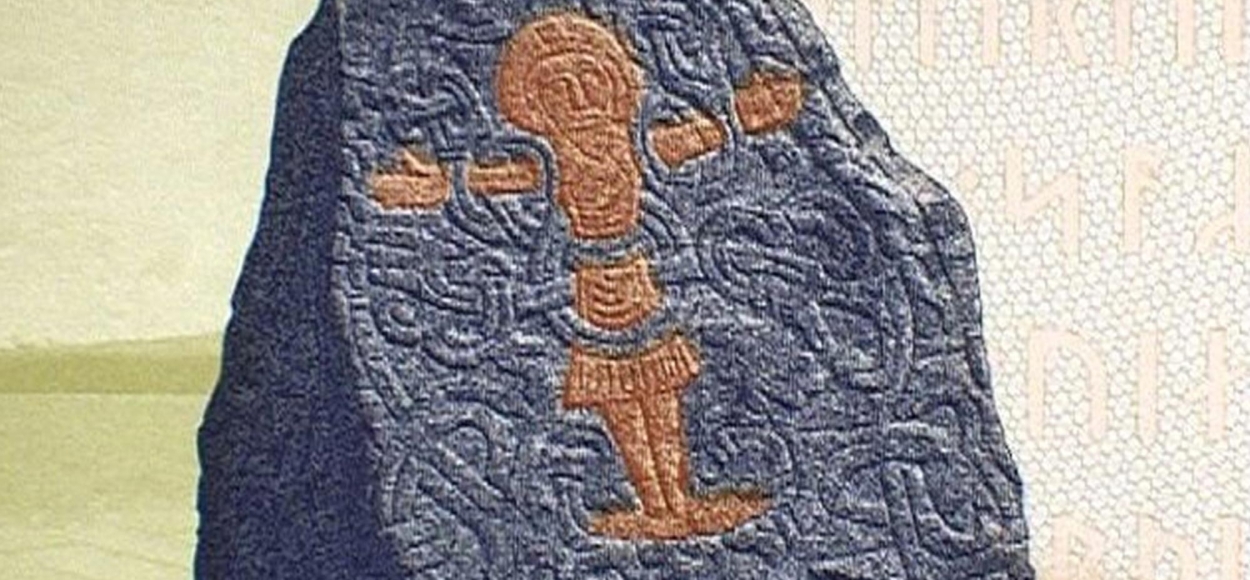
Ansgar, the apostle of the North