‘Moravians in Conflict’ – Archives Exhibition in Gracehill 28th February
One of the most unique things about the Moravian Church is its proficiency in keeping comprehensive records. Since the founding of the Gracehill Moravian settlement in 1759, ministers have kept diaries, congregation meetings have been recorded and birth, death and marriage records meticulously preserved. This custom of the Moravian Church makes it a treasure trove for professional researchers and family historians alike.
For the past few years, the Moravian Archives of Ireland, based in Gracehill, have endeavoured to run an exhibition in the first few months of the year, showing some of these incredible records, and artefacts that have been collected over the course of the settlement’s history. This year, the theme of ‘Moravians in Conflict situations,’ was chosen and the planning began.
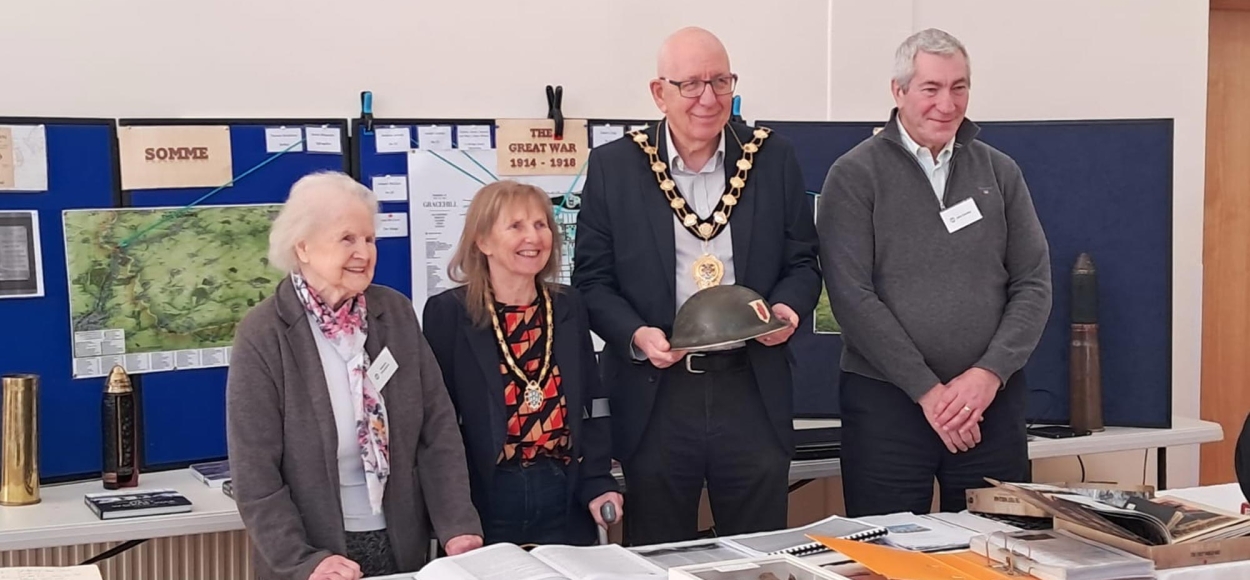
The exhibition sought to highlight the role of Moravians in situations of conflict since they arrived on the island of Ireland in the 18th century. Visitors were informed about the history of these events, from the United Irishmen rebellion of the 1798 to modern conflict and everything in between. There were knowledgeable guides at each station speaking to guests and making the experience more personal.
The success of the day was indicated on the previous evening with a talk by Lorraine Parsons, of the British Provincial Archivist which attracted almost 50 listeners. She shared instances of wider British Moravian involvement in the First World War, highlighting Moravian Messenger articles from the time as a mine of information for understanding the conflict and the role that Moravians played in it.
The day of the exhibition began with a display on the United Irishmen rebellion of 1798. Gracehill has a special connection to this event as it is well known in the local area, and recorded on the minister’s diary from the time, that the village was a sanctuary to both sides during the conflict. The rebellion was the subject of a talk given on the day by Alistair Donaghy, a local guide and Stephen McCracken, a guide and writer who can trace his family’s involvement in the conflict.
There was also a great focus on the world wars with an effort made to commemorate Moravians who served and gave their lives. Drawing a lot of attention in this section of the exhibition were physical artifacts including replica pistols and genuine World War I helmets and weapons. These helped bring to life the stories that were on display. Members of Gracehill who served in World War I are commemorated on a plaque in the Church. This plaque, the people on it and the history behind it, were the focus of another fascinating talk given on the day by Andrew Gamble. The contributions of other service people form the area were also highlighted. Information from University Road Moravian Church, Belfast drew attention to the role Kay Adams, who served in World War II as a precision Instrument Repairer in the WAAF. Both the talks that punctuated the exhibition, as well as the one on the preceding day were very well attended, and feedback could only be described as glowing.
Overall, it’s fair to say that archivist Jackie Neill along with the rest of the archivists and organisers of this event couldn’t have been happier with the results. The turnout was greater than in previous years, with attendees including local historians, politicians and writers, as well as a large group of History students from Queen’s University Belfast.
The event was also attended by many members of Gracehill Church and residents of the village, whose unfailing support in preserving and sharing the history of the village, whether on World Heritage Day or events such as this, is the most encouraging of all. Our warmest thanks to everyone who contributed to the exhibition and our wonderful caterers who kept us fed and watered over the weekend. What was achieved on the day in terms of numbers and reception was admirable. However, I’m sure all the archivists who participated in this event would agree that the connections made and strengthened during the months of preparation were just as rewarding and encouraging as the event itself.
While the Gracehill Moravian Archives hold the title ‘Moravian Archives of Ireland’ this was a truly collaborative endeavour, with tireless work from archivists in Cliftonville, Ballinderry and University Road Churches being invaluable. They are so enthusiastic about the work they are doing, all helping each other and sharing valuable knowledge and insights. That passion and teamwork is what makes events like this achievable and speaks to the spirit and ethos of the Moravian community.
Sr Amy Baird
Gracehill
More Spotlight News
‘Moravians in Conflict’
Ansgar, the apostle of the North